


The Truth About Daisy Chaining Power Strips in Your Home Office
Working from home has changed how we power our daily lives, with monitors, laptops, printers, and chargers all competing for limited outlets. Many homeowners in Central Florida turn to a quick fix called daisy chaining, which means plugging one power strip into another to multiply available sockets. This practice looks harmless on the surface, but it creates serious electrical hazards that can damage equipment and start fires. The National Fire Protection Association reports thousands of home fires each year linked directly to overloaded power strips and extension cords. Understanding why this shortcut fails will help you build a safer, more reliable home office setup. If your workspace already has tangled cords running between strips, now is the time to address the problem before it becomes an emergency.
What Daisy Chaining Power Strips Actually Means for Your Home Office
Daisy chaining refers to connecting two or more power strips together in a series, with the second strip plugged into the first one. Homeowners often do this when they run out of outlets behind a desk or entertainment center. The setup might seem to work fine for weeks or months, but the underlying electrical load tells a different story. Each wall outlet is rated for a specific amperage, typically 15 or 20 amps in residential settings. When you stack power strips, you exceed the safe load the original circuit was designed to handle. This violates the National Electrical Code and the manufacturer instructions printed on every power strip sold in the United States.
The Hidden Dangers of Daisy Chaining Power Strips at Home
Stacking power strips creates a fire risk that builds quietly over time. The wires inside a standard power strip are thin compared to the wiring in your walls, and they heat up rapidly when overloaded. Heat damages the insulation around the conductors, which eventually exposes bare wire and causes arcing. Arcing produces sparks that can ignite carpet, papers, or furniture nearby. The plastic housing of most strips will also melt under sustained heat, releasing toxic fumes into your home office. Many homeowners never see the warning signs because the damage happens inside the strip itself.
The Occupational Safety and Health Administration prohibits daisy chaining in commercial buildings for good reason. The same physics apply inside your home, even though residential code enforcement is less strict. Insurance companies frequently deny fire claims when investigators find daisy chained power strips at the source of the blaze. Your homeowner policy may include language that excludes coverage for damage caused by misuse of electrical equipment. This means a single melted strip could cost you tens of thousands of dollars in unrecovered losses. Protecting your investment starts with following the basic rules of safe electrical use.
Daisy chaining also damages the sensitive electronics plugged into your strips. Voltage drops occur when too many devices share a single circuit, and computers receive less power than they need to run stably. This causes random reboots, data corruption, and shortened lifespans for laptops, monitors, and external drives. Surge protectors built into the second or third strip in a chain often fail to function correctly because they rely on a clean ground path. A proper ground requires a direct connection to the wall outlet, not a path filtered through multiple devices. Your expensive equipment deserves better protection than a stacked configuration can provide.
Why Daisy Chaining Power Strips Overloads Your Circuit Breaker
Every circuit in your home has a breaker designed to trip when the current exceeds a safe level. The breaker protects the wiring inside your walls from overheating, not the devices plugged into the outlets. When you daisy chain power strips, you can easily pull more current than the breaker expects to see from a single outlet. The breaker still trips eventually, but only after the power strips have already absorbed dangerous levels of heat. This delayed response is what makes daisy chaining so risky compared to other electrical mistakes.
A typical home office might include a desktop computer pulling 300 watts, two monitors at 50 watts each, a printer at 200 watts during printing, and various chargers adding another 100 watts. Adding a space heater or coffee warmer pushes the total well past 1,500 watts on a single 15 amp circuit. When all this load runs through stacked power strips, the connection points between the strips become weak links. These connection points carry the full current of every device downstream, and they are not designed for sustained high loads. The result is heat buildup at the plug ends, which is the most common ignition point in power strip fires.
Older homes throughout Clermont and surrounding areas often have circuits shared between multiple rooms. Your home office outlet might share a circuit with the kitchen, bathroom, or garage. Adding daisy chained power strips to a shared circuit increases the chance of nuisance trips and unexpected outages. Worse, a circuit that should trip might not trip in time if the breaker itself is old or worn out. Have a licensed electrician inspect your panel if your home was built before 2000 or if you experience frequent breaker trips. Need an electrical panel evaluation? Click here for our electrical panel upgrade service.
How Daisy Chaining Power Strips Voids Manufacturer Warranties
Every power strip sold by reputable brands includes a label stating that the device should be plugged directly into a wall outlet. This instruction is not a suggestion; it is a condition of the warranty and safety certification. Underwriters Laboratories tests power strips under specific conditions that assume a direct wall connection. Once you plug one strip into another, the testing assumptions no longer apply, and the UL listing becomes void for that installation. This matters because UL certification is what gives the device its legal status as a safe consumer product.
Manufacturers like Belkin, APC, and Tripp Lite explicitly warn against daisy chaining in their product documentation. Filing a warranty claim after a fire or equipment damage becomes nearly impossible when the company finds evidence of stacked strips at the scene. The same logic applies to the warranties on your computers, televisions, and audio equipment. Most electronics warranties exclude damage caused by improper power delivery, including power supplied through unauthorized configurations. You could lose coverage on a $3,000 workstation because of a $20 power strip used incorrectly.
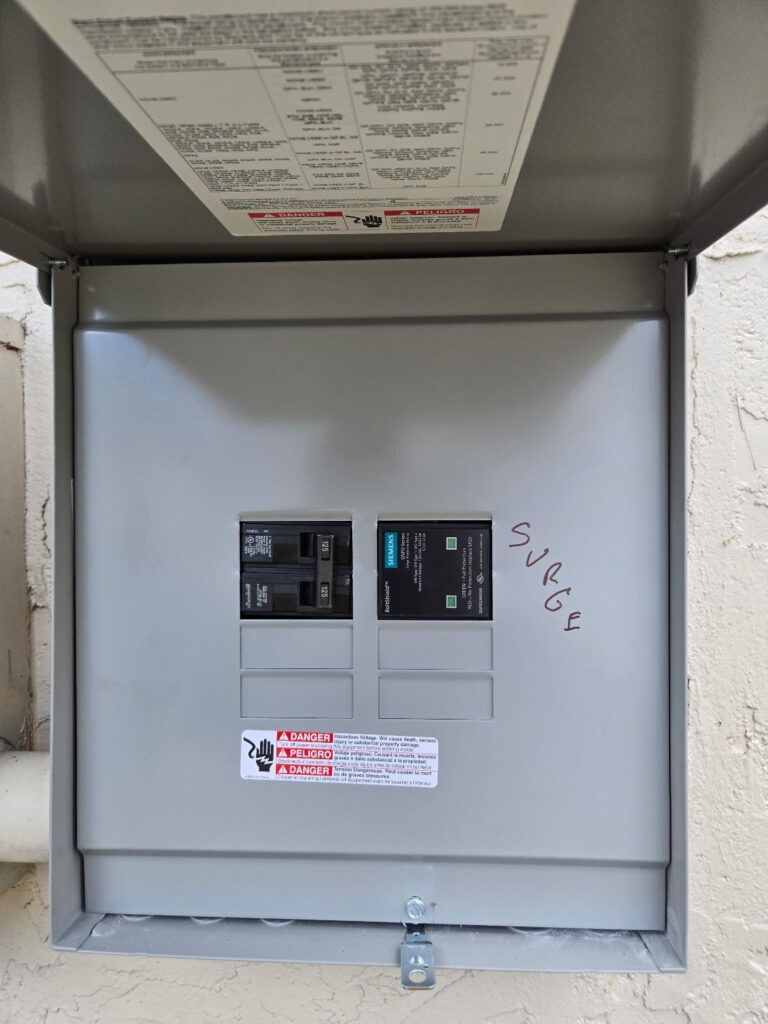
Surge protection ratings also become meaningless when strips are daisy chained. A surge protector rated for 2,000 joules can only absorb that energy when connected directly to the wall. When stacked, the protective components in each strip interfere with each other, and the actual protection drops dramatically. Lightning strikes are common during Florida summer storms, and a single nearby strike can send thousands of volts down your home circuits. Without proper surge protection, your home office equipment is exposed to damage that could have been prevented. Whole house surge protection installed at the panel offers far better defense than any configuration of power strips.
How to Power Your Home Office Safely Without Daisy Chaining Power Strips
Building a safe home office starts with understanding how much power your equipment actually needs. Most modern computers, monitors, and peripherals draw far less power than older models, so the real issue is usually outlet quantity rather than circuit capacity. The solution is to add proper outlets where you need them, not to multiply the outlets you already have through risky shortcuts. A licensed electrician can assess your workspace and recommend specific upgrades that match your equipment list. These upgrades typically pay for themselves through improved equipment reliability and reduced fire risk. Florida homeowners also benefit from the added value these improvements bring at resale time.
Installing Dedicated Circuits Instead of Daisy Chaining Power Strips
A dedicated circuit is a wire run that serves only one outlet or one specific device. This eliminates the load sharing problems that cause overheating and tripped breakers. Home offices with desktop computers, multiple monitors, and laser printers benefit enormously from dedicated circuits. The cost of installation varies based on the distance from your electrical panel and the difficulty of routing the new wire. Most installations in single story homes can be completed in a single day with minimal disruption. The improvement in power quality is immediately noticeable, especially during summer when air conditioning loads stress the rest of the electrical system.
Dedicated circuits also support the use of higher capacity outlets, such as 20 amp receptacles with T shaped slots. These outlets accept standard plugs but can also handle equipment with higher current demands like commercial grade printers or audio recording gear. The wiring used for a dedicated circuit is heavier gauge than typical branch wiring, which means less voltage drop and cooler operation. Cool operation extends the life of every device plugged into the circuit, from your router to your monitor. This is especially valuable for home offices that run continuously through the workday.
Adding dedicated circuits is also an opportunity to install proper grounding and ground fault protection. Modern home offices with multiple electronic devices need a solid ground reference to function correctly. Ground fault circuit interrupters protect you from shock hazards if a device develops an internal fault. Arc fault circuit interrupters detect dangerous arcing before it can start a fire, adding another layer of safety. Together, these protections make your home office far safer than any setup relying on power strips alone. Ready to upgrade your home office wiring? Click here for our dedicated circuit installation service.

Adding More Outlets to Eliminate the Need for Daisy Chaining Power Strips
The real reason most homeowners daisy chain power strips is simple; they do not have enough outlets where they need them. Building codes from decades ago required far fewer outlets than modern living demands. A typical bedroom built in the 1980s might have only two duplex outlets, while today the same room often needs eight or more. The solution is to add outlets in strategic locations around your desk and workspace. A skilled electrician can install new outlets without major drywall damage in most cases. The result is a clean, professional installation that looks like it was part of the original construction.
Outlet placement matters as much as outlet quantity in a functional home office. Outlets located above the desk surface eliminate the need to crawl under furniture to plug in devices. USB integrated outlets reduce the number of wall warts cluttering your space. Outlets with built in surge protection add a layer of defense at the wall itself, before any power strip enters the picture. Each of these options can be combined to create a home office that supports your work without compromise. The investment is modest compared to the cost of replacing equipment damaged by power problems.
Many home offices benefit from outlets installed in unusual locations, such as inside cabinets or behind built in furniture. A floor outlet near the center of a large room eliminates the need to run cords across walkways, which is a major trip hazard. Outlets installed inside desk drawers can charge phones and tablets without visible clutter on the work surface. These custom installations require careful planning to comply with code requirements for accessibility and fire safety. A professional electrician handles the permits and inspections that make the work fully compliant. Need additional outlets in your home office? Click here for our outlet installation service.
Using Quality Surge Protectors Correctly Instead of Daisy Chaining Power Strips
A single high quality surge protector plugged directly into a wall outlet provides better protection than three cheap strips chained together. Look for surge protectors with at least 2,000 joules of energy absorption and a UL 1449 certification. These ratings indicate the device meets current safety standards for residential and commercial use. The protector should also have an indicator light that confirms the surge components are still functional. Surge protectors wear out over time as they absorb voltage spikes, and a dead protector offers no defense against the next surge.
Position your surge protector so it can be inspected and replaced easily. Mounting it inside a cabinet or behind heavy furniture makes maintenance difficult and discourages regular checks. The cord on a quality surge protector should be at least six feet long, allowing flexibility in placement without requiring extensions. Never plug a surge protector into an extension cord, and never plug an extension cord into a surge protector. Both of these configurations defeat the purpose of the protection and create the same hazards as daisy chaining.
For maximum protection in lightning prone areas like Central Florida, combine point of use surge protection with whole house protection installed at the electrical panel. The panel mounted unit blocks large surges from utility lines and lightning strikes before they reach your indoor equipment. Point of use protectors then handle smaller surges generated by appliances inside the home. This layered approach is the gold standard recommended by electrical engineers and insurance companies. Florida storms make this investment particularly valuable for any home office with expensive computer equipment. Want stronger protection against power surges? Click here for our whole house surge protector service.
Why You Need a Licensed Electrician to Fix Your Home Office Wiring
Electrical work in a home office is more than a convenience issue; it is a safety issue with real legal and financial consequences. Florida law requires licensed electricians for most permanent wiring work, and insurance policies expect compliance with this requirement. DIY attempts to add outlets or run new circuits often fail inspection or create hidden hazards that surface years later. A licensed electrician brings the training, tools, and code knowledge needed to do the job correctly the first time. The cost of professional installation is small compared to the value of doing it right.
The Licensed Electrician Difference for Home Office Power Solutions
Licensed electricians complete years of training and apprenticeship before earning the right to work independently. This training covers the National Electrical Code, Florida specific amendments, and the practical skills needed for clean, durable installations. A licensed electrician carries insurance that protects you if something goes wrong during or after the work. This protection extends to your home and to any injuries that might occur on the job site. Unlicensed handymen offer none of these protections, and their work often fails to meet code.
Permits are another area where licensed electricians add value. Most electrical work in Florida requires a permit, and permits require a licensed contractor to pull them. Permitted work is inspected by the county or city building department, which provides an independent verification that the installation is safe. Unpermitted work can cause problems when you sell your home, since buyers and their inspectors look for matching permits on visible upgrades. Insurance claims also benefit from documented, permitted work that proves the installation was done correctly.
The quality difference between licensed and unlicensed work shows up in the details. A licensed electrician uses the correct wire gauge, proper junction boxes, and code compliant connectors. They torque every connection to manufacturer specifications and label every circuit clearly in the panel. These details prevent the loose connections and overheating that cause most electrical fires. Your home office equipment runs better, lasts longer, and stays safer when the wiring behind it is done to professional standards.

Common Mistakes Licensed Electricians Fix in Home Office Wiring
Many home offices have wiring problems that the homeowner does not even recognize. Ungrounded outlets are common in homes built before the 1970s, and they leave sensitive electronics vulnerable to damage. A licensed electrician can test every outlet and replace any that fail to meet current standards. The fix is often straightforward and dramatically improves the safety of the workspace. This kind of upgrade is one of the highest value improvements a homeowner can make.
Overloaded circuits are another common problem in home offices that have grown over time. What started as a simple desk with a laptop may now include three monitors, a printer, a network switch, and various smart home devices. The original circuit may not have been designed for this much equipment, and signs of overload appear gradually. Warm outlets, flickering lights, and occasional breaker trips all point to circuits working harder than they should. An electrician can measure the actual load and recommend either redistribution or new circuits as needed.
Outdated or damaged wiring inside walls poses the greatest hidden risk. Aluminum wiring used in homes built between 1965 and 1973 has well documented problems with overheating at connection points. Cloth insulated wiring used in even older homes becomes brittle and exposes bare conductors. A licensed electrician identifies these issues during an inspection and recommends safe solutions. Replacing problem wiring before it fails is far less expensive than repairing fire damage after it does. Click here for our electrical inspection service.
Why Choose Empowered Electric for Your Clermont Home Office
Empowered Electric serves homeowners throughout Clermont and the surrounding Central Florida communities with licensed, insured electrical services. Our team understands the unique demands of modern home offices and the electrical infrastructure that supports them. We bring transparent pricing to every job, so you know exactly what the work will cost before we begin. Our 24/7 emergency service means help is available whenever an electrical problem disrupts your work or threatens your safety. Every installation we complete meets or exceeds current code requirements.
We treat every home office project as an opportunity to improve the long term safety and functionality of your living space. Our electricians take the time to understand how you use your space and what equipment you depend on each day. This consultation approach leads to solutions that fit your actual needs, not generic recommendations that miss the mark. We use quality materials from trusted manufacturers, and we stand behind our work with strong warranties. The result is a home office that supports your productivity without compromise.
Reach out to Empowered Electric at (352) 814-0058 to schedule a consultation for your home office wiring needs. Our team is ready to evaluate your current setup, identify any hazards, and recommend specific improvements that fit your budget and timeline. We serve homeowners from Clermont to Winter Garden, Windermere, Davenport, and beyond. Stop relying on daisy chained power strips and start enjoying the peace of mind that comes with professionally installed electrical service. Your equipment, your work, and your family all deserve the safety that only proper electrical infrastructure can provide.